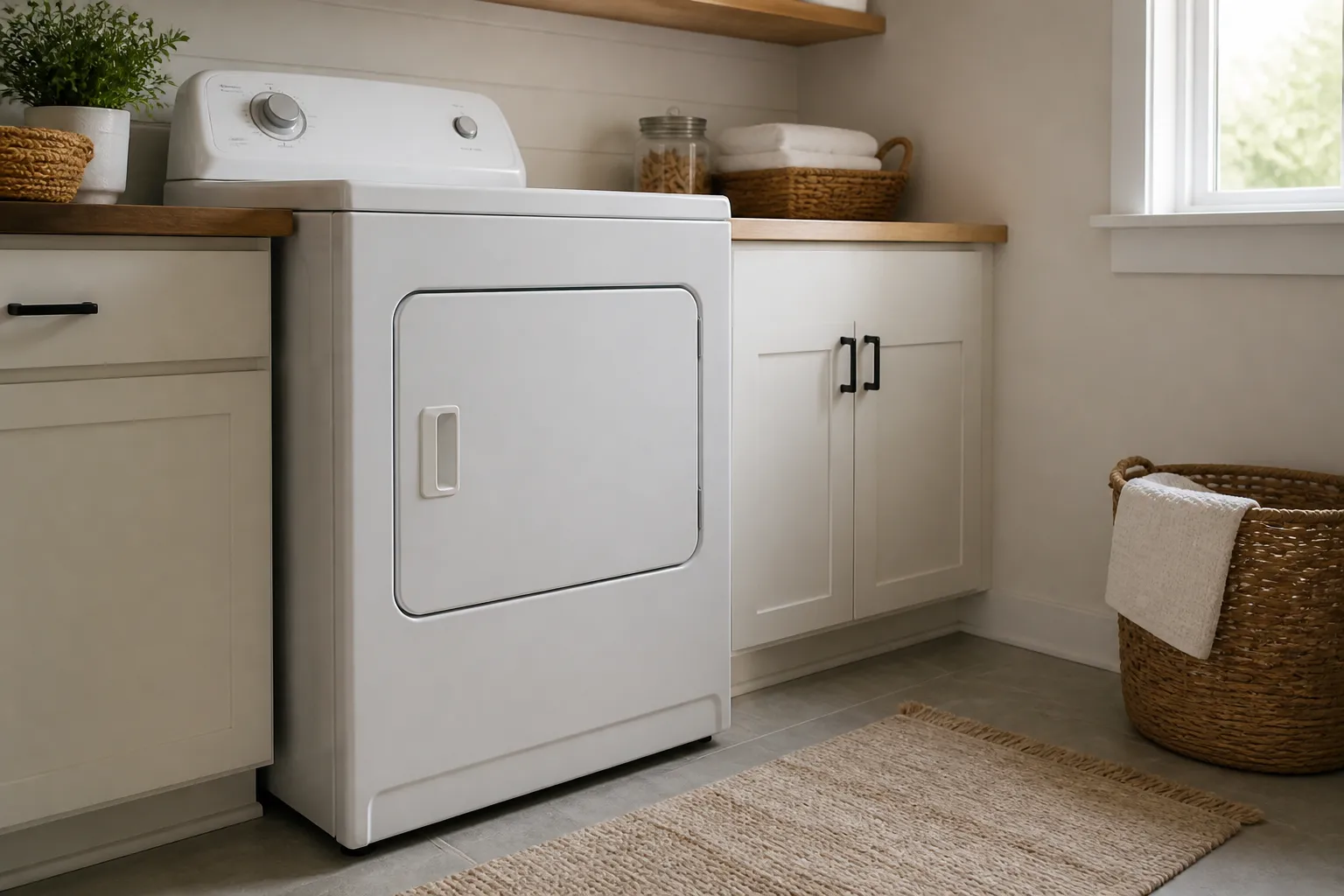
Your dryer takes too long, leaves clothes damp, or starts making a sound that was not there yesterday. Maybe the drum turns, but the heat is gone. Maybe it runs, then shuts off, or the cycle ends and laundry still feels heavy and cold. When that happens, you need a repair service that can narrow down the cause without wasting time.
Appliance Repair Specialists, Inc. handles dryer repair for homes across Des Moines, WA. We work on common problems with electric dryers and gas dryers, including weak heat, no heat, drum issues, noisy operation, and control troubles. If your dryer has changed the way it runs, we can help track down the source and get it back to useful service.
Dryer trouble does not always start with a full breakdown. Often, the machine gives warning signs first. You may notice one symptom at a time, or several at once. A dryer that used to finish a load in one cycle may now need two. A drum that sounded smooth before may now squeak, thump, or scrape. Those changes matter because they often point to a part that is wearing out.
Here are common signs that call for dryer repair:
When these symptoms appear, we look at the machine as a whole, not just the part that seems obvious. A heating issue may be tied to airflow, a thermostat, a sensor, or another component. A noise issue may involve rollers, belts, pulleys, or drum support parts. Careful diagnosis saves time and helps avoid repeat visits for the same problem.
A dryer that runs without drying clothes often has a heat or airflow problem. Sometimes the unit warms a little, but not enough to finish the load. Other times it tumbles with almost no heat at all. In both cases, the root cause may be deeper than the setting on the control panel.
If your dryer runs but never heats, we inspect the parts tied to temperature control and heat production. That may include the igniter, heating element, thermal fuse, or thermostat, depending on the appliance type and symptoms. We also check whether the dryer is cycling as it should, since a failed component can stop heat from coming on at all.
Weak drying can point to restricted airflow, a failing sensor, or a heater that is not producing enough output. Even when a dryer seems to be working, poor airflow can stretch dry times and leave laundry unevenly dried. That is why we look beyond the surface symptom and check the path the air is taking through the machine.
Some dryer problems announce themselves with sound before anything else goes wrong. A squeal, thump, scrape, or grinding noise usually means a moving part is under stress. Catching that early can help prevent damage to other parts of the machine.
Common causes of dryer noise include:
We listen for when the noise happens. Noise at startup can point to one issue, while noise during tumble can point to another. That timing helps us isolate the repair and avoid replacing the wrong part.
When a dryer will not start, stops partway through, or seems to ignore the selected cycle, the trouble may be electrical, mechanical, or related to a control part. Homeowners often notice these problems as inconsistent behavior, not a full stop. The machine may work one day and act up the next, which can make the issue harder to pin down without testing.
We commonly check for:
Some cycle problems are caused by something simple, like a door that is not signaling the dryer to start. Others call for more detailed inspection. Either way, the goal is to identify the real reason the dryer is acting up, not just the symptom you can see from the outside.
At Appliance Repair Specialists, Inc., we start by listening to what the dryer has been doing and when the problem began. A dryer that heats poorly after a long run of heavy loads may point to a different issue than one that suddenly quit yesterday. The more specific the symptom, the faster we can narrow it down.
We begin with the most useful tests for the complaint you described. That may include the start sequence, heating behavior, drum movement, cycle progression, or sound during operation. We also look at visible wear, damage, or looseness around key moving parts.
If the first checks do not reveal the cause, we move into deeper troubleshooting. That can mean testing components tied to heat, motion, or control response. This process helps separate a single failed part from a larger issue affecting the dryer’s operation.
Our approach is meant to be practical. You do not need a long guesswork process. You need a clear answer about what is wrong and what needs attention. That is how we handle dryer repair for homes across Des Moines, WA.
Not every dryer issue looks the same, but many problems are worth repairing when the machine is otherwise solid. A dryer with a failed heating part, broken belt, worn roller, or faulty switch may still have many useful years ahead after the needed repair is completed. The key is making a decision based on the appliance’s condition and the parts involved.
Repair often makes sense when:
We do not push unnecessary work. If the issue can be traced and corrected without replacing more than needed, that is the route we aim for. If the problem has multiple causes, we explain that clearly so you can decide how to move forward.
Once the repair is handled, a few simple habits can help your dryer stay easier to use. These are not complicated steps, but they do make a difference in how hard the machine has to work on each load.
If you notice a return of the same symptom after a repair, call for another look sooner rather than later. Repeating the same strain on a dryer can turn a manageable issue into a larger one. Small changes in performance are often the first clue that something needs attention.
Long dry times can come from poor airflow, weak heat, an overloaded drum, or a part that is no longer cycling the way it should. A full inspection helps narrow down the exact cause.
A dryer may stop mid-cycle because of a door switch issue, a control problem, a failed safety component, or another electrical fault. Testing the start and cycle controls usually helps identify the source.
Squealing often points to a worn roller, pulley, or belt-related issue. The timing of the sound, such as at startup or during tumble, helps narrow down which part is involved.
Yes, a dryer can still turn while failing to heat. That usually means the problem is tied to the heating circuit, temperature control, or airflow path rather than the drum motor.
No. Many dryer noises come from moving support parts, belts, or something loose inside the cabinet. The motor is only one possible cause.
If clothes stay damp, drying times keep getting longer, the unit makes unfamiliar sounds, or the cycle behavior changes, it is time to schedule service. Those signs often point to a part that needs attention.
If your dryer is leaving loads damp, making unusual noise, or refusing to heat the way it should, Appliance Repair Specialists, Inc. is ready to help. We provide dryer repair for Des Moines, WA and nearby service areas across western Washington. Call +13607549252 to set up service and get your laundry routine back on track.

Request Service
Tell us which appliance is acting up and what it is doing. We will help you get the right repair or installation service for your home.