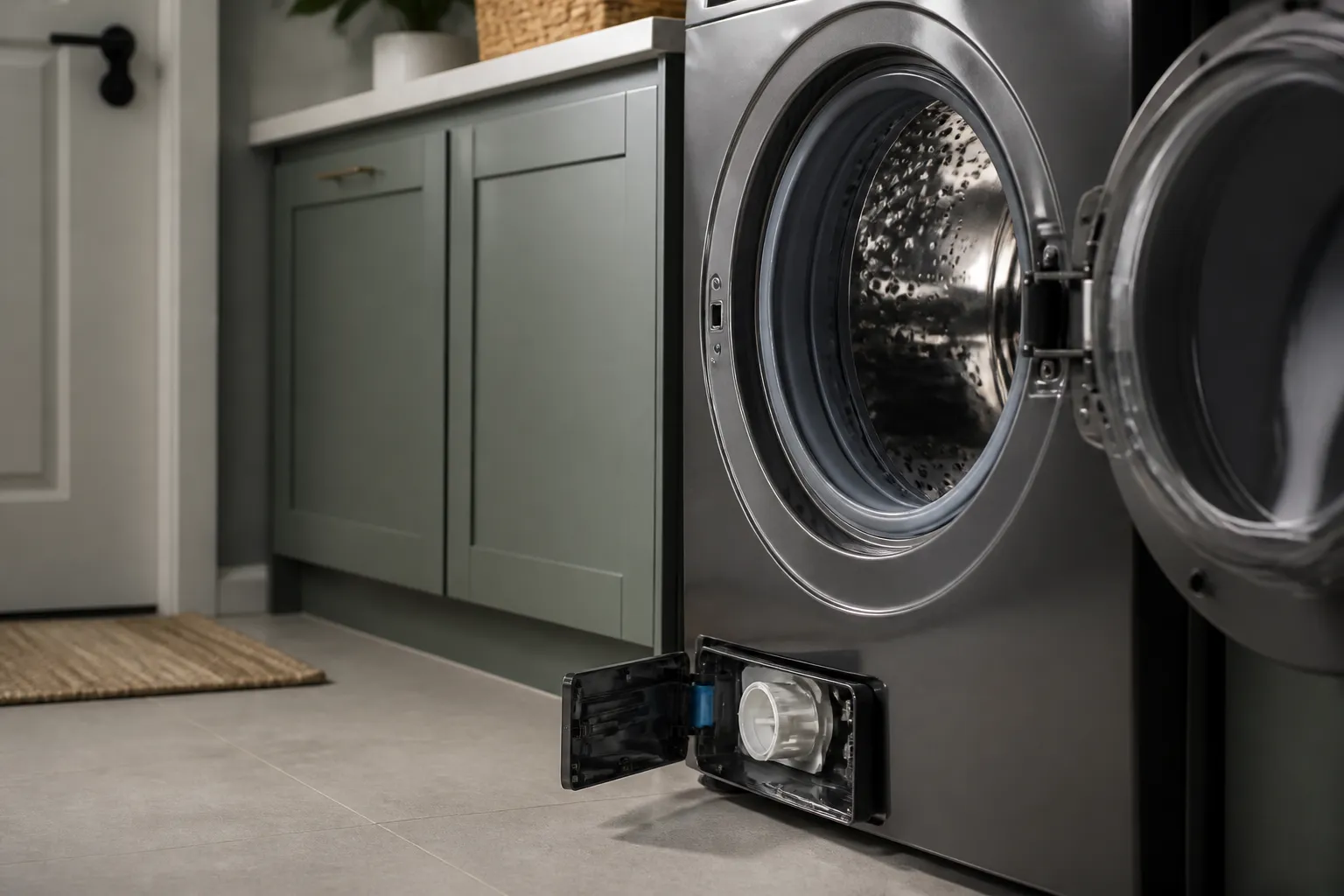
Your refrigerator is running, but the food still warms up. Your washer starts, pauses, then throws off the whole load. Your dryer tumbles yet leaves clothes damp. When an appliance acts this way, guessing can waste time and money, and the real problem often hides behind a symptom that looks simple from the outside.
Appliance Repair Specialists, Inc provides appliance diagnostics for Des Moines, WA homes so you can get a clear explanation of what is happening and what should happen next. We look at the signs your appliance is giving, trace the cause, and help you move toward the right repair for refrigerators, washers, dryers, ovens, ranges, dishwashers, microwaves, and trash compactors.
Many appliance problems begin with a small change that is easy to ignore. The sooner you pay attention to those changes, the easier it is to narrow down the cause.
Those symptoms do not always point to the same repair. A weak seal, a sensor issue, a worn part, a drain concern, or an electrical control problem can create similar results. Diagnostics help sort out the difference before anyone starts replacing parts without a clear reason.
During an appliance diagnostic visit, we look at the appliance as a complete system rather than focusing on one obvious symptom. That helps us find the cause instead of treating a guess.
We start with the basics that affect performance every day. If the appliance is not receiving the right signal from the controls, switch, or internal components, it may behave unpredictably or fail to start at all.
For refrigerators, ovens, dryers, and washers, we look at how the unit responds through each stage of operation. That includes startup, cycling, heating, cooling, timing, and shutdown.
Dishwashers, washers, and trash compactors rely on movement, drainage, and sequence. If one stage stalls, the whole process can break down, even when the appliance still appears to run.
When an appliance starts acting up, it can be tempting to replace the part that seems most likely. That approach sometimes works, but it can also leave the real problem untouched. Diagnostics reduce the chance of chasing the wrong issue.
We identify what is actually keeping the appliance from performing as it should, rather than focusing only on the visible symptom.
Once the problem is known, you can decide whether a repair makes sense and what type of service is needed next.
A good diagnosis helps avoid repeated callbacks for the same symptom caused by an overlooked issue.
If your appliance has been acting inconsistently, diagnostics can save time by turning a vague problem into a specific next step.
We diagnose the appliances most homeowners rely on every day. That includes units that heat, cool, wash, dry, and compact.
Appliance Repair Specialists, Inc also handles microwave and dishwasher installation work, so a diagnosis can be useful when a unit is not performing as expected after a recent install or when a kitchen appliance needs a closer look.
Before we arrive, a few details can help us focus the diagnostic visit and avoid unnecessary backtracking.
Describe what the appliance is doing, when it started, and whether the problem happens every time or only sometimes. Small details matter, especially if the issue shows up during one step of a cycle.
If the appliance was recently moved, installed, cleaned, or used differently, mention that as well. Any change in routine can point us toward the cause faster.
Unusual noises, lights, error behavior, leaks, smell, weak heat, or water left behind all give useful clues. Even if the appliance still runs, those signs tell us where to look first.
For Des Moines, WA homeowners, appliance diagnostics should feel straightforward from the first call through the visit. Appliance Repair Specialists, Inc serves Des Moines and nearby areas across western Washington, including Federal Way, Puyallup, Tacoma, South King, Pierce, and Thurston County.
We use the information you provide to narrow the problem and arrive ready to assess the appliance on site. That matters when the issue is intermittent or when the appliance seems to work one day and fail the next. A careful check can reveal whether the concern is tied to temperature control, drainage, movement, heating, or a control component.
If you are not sure whether the appliance needs repair or further evaluation, diagnostics are the right place to begin.
Once the problem is identified, we can talk through the repair path that fits the appliance and the symptom. Some issues are limited to a single worn part. Others involve more than one component working together. Either way, the point of diagnostics is to give you a clear answer before more time is lost.
For homeowners who want a straightforward assessment of a refrigerator, washer, dryer, oven, range, dishwasher, microwave, or trash compactor, Appliance Repair Specialists, Inc is ready to help with appliance diagnostics for Des Moines, WA.
We diagnose refrigerators, washers, dryers, dishwashers, ovens, ranges, microwaves, freezers, garbage disposals, and trash compactors.
A unit can still power up and have a meaningful problem. Strange noises, weak performance, uneven heating, poor draining, or cycle trouble can all point to a repair need.
No. You only need to describe the symptoms you have noticed. We use those details to trace the cause.
Yes. If a microwave or dishwasher was recently installed and now shows a problem, a diagnostic check can help identify whether the issue is related to the appliance itself or its operation.
Tell us about noise, temperature changes, standing water, leaks, poor drying, uneven baking, or any error behavior you have seen.
Yes. If the appliance shows several symptoms, we evaluate them together so the cause is not missed.

Request Service
Tell us which appliance is acting up and what it is doing. We will help you get the right repair or installation service for your home.